

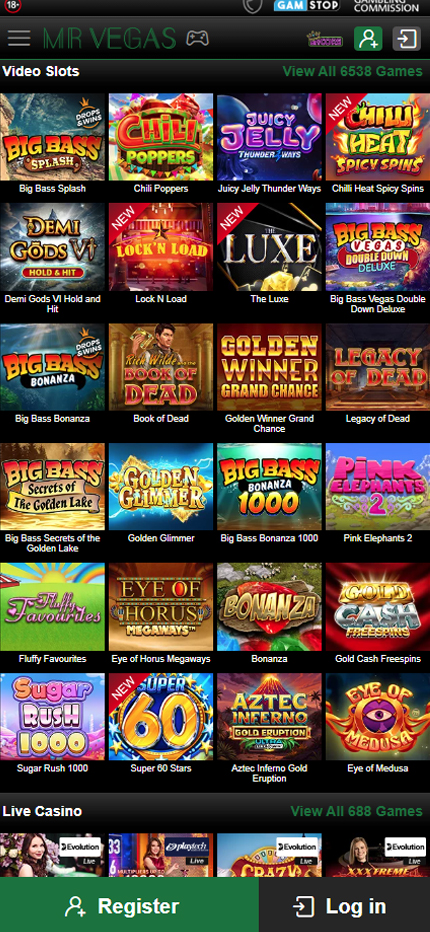
I have devoted years guiding players on how to approach online gaming platforms, and the first real interaction you will ever have with a service like Mr Vegas Casino is the login and registration screen. It seems trivial, but that sole gateway shapes your entire experience. When I judge whether a casino login system is suitable for a client, I go beyond the surface of a username and password field. I scrutinize how the platform conducts identity verification, how it processes sensitive data transmission, and whether the friction produced by security protocols is actually safeguarding you or just taking up your time. The French market has matured significantly, and players in France now expect a seamless digital entry point that values both their time and their privacy. I want to guide you through the critical mechanics of account creation, the psychology behind secure authentication, and the specific steps you will come across on a modern registration page. By understanding these elements, you can make an informed decision about whether the system aligns with your personal comfort level and security expectations before you even place a single wager.
The Mental Aspect Behind a Secure Login Gateway
When I work for platforms like Mr Vegas Casino, I stress that the login page is not just a technical barrier; it is a psychological contract between you and the operator. The moment you arrive at a registration form, your subconscious is scanning for trust signals. You are looking for the padlock icon in the address bar, the clarity of the data fields, and the absence of clutter that might indicate a phishing attempt. I have observed that players who feel psychologically safe during the sign-up process are far more likely to finalize the registration and interact with the platform responsibly. A well-designed login interface employs negative space and progressive disclosure to avoid flooding you. Instead of placing a massive form in your face immediately, a smart system requests the essential email and password first, then gradually collects additional details. This approach honors your cognitive load and reduces the abandonment rate. I always tell my clients that if a login page appears like a bureaucratic interrogation, the casino has flunked its first test. The right login option should make you feel like a valued guest accessing a private club, not a suspect undergoing a security screening. The emotional response you have during those first thirty seconds sets the tone for your entire gaming session, and a reputable operator knows that your peace of mind is the most valuable currency they can gain.
Two-Factor Authentication and Enhanced Security Measures
Once your account is active, the login process should provide more than just a static password. I wholeheartedly advocate for enabling two-factor authentication, or 2FA, as soon as you finish registering. This security layer requires you to submit a second piece of verification besides your password, commonly a time-sensitive code generated by an app like Google Authenticator or transmitted via SMS. The advantage of 2FA is that even though a hacker somehow gains access to your master password, they are locked out without physical control of your mobile device. I have examined countless account breach reports, and the common element among victims is the absence of this simple toggle. A modern login system also uses invisible security safeguards that you will rarely see, such as device fingerprinting and behavioral biometrics. The platform tracks the unique configuration of your browser and how you enter your password. If a login attempt arises from a device in a different country with a different typing cadence, the system can silently flag it and require additional verification. I would like you to understand that these friction points are not intended to bother you; they are the digital parallel of a security guard identifying that the person walking in does not fit the usual customer. When you come across the option to remember a device, use it only on your personal laptop or phone, not at all on a shared or public computer, because that trusted device status overrides some of these intelligent checks.
The essential role of identity verification
I have seen many players become annoyed when asked to upload a copy of their passport or a utility bill, but I aim to describe why this requirement is non-negotiable and in the end safeguards you. The Know Your Customer process, commonly abbreviated as KYC, is a regulatory mandate that prevents money laundering, identity theft, and underage gambling. When Mr Vegas Casino requests a government-issued ID, they are checking that the person logging in is actually you and not someone who acquired your credentials on the dark web. The document upload interface needs to be encrypted, meaning your sensitive files are scrambled during transit and incomprehensible to interceptors. I invariably advise taking a clear, well-lit photo of your ID and a recent bank statement or utility bill that matches the address you registered. The verification team generally checks these documents within twenty-four hours, though many modern systems now use AI-driven optical character recognition to clear you in under five minutes. If the platform fails to implement KYC, I would view that a massive red flag. A casino that bypasses verification is likely operating without a proper license, and you have no remedy if your funds go missing. The minor inconvenience of snapping a photo of your ID is negligible compared to the security of knowing your account cannot be easily hijacked or your winnings retained due to unverified identity claims.
Detailed Registration Guide
I aim to guide you through the exact flow you will face when setting up an account, so there are no complications. First, you will press a noticeable registration button that directs you to the identity form. The first fields you fill in are usually your email address and a secure, unique password. I absolutely cannot stress adequately how vital it is to use a password that you do not reuse anywhere else; this single action is your first line of defense against credential stuffing attacks. After creating your login credentials, the system will ask you to enter your full legal name, date of birth, and residential address. This is not just administrative hurdles. In France, regulated operators are legally obligated to check that you are over eighteen and not living in a restricted jurisdiction. The platform will likely perform a soft electronic check against public databases to confirm your address instantly. Once the basic profile is filled out, you will proceed to the contact verification stage, where a mobile number is often needed. I suggest you to double-check every character you type because a single typo in your email or phone number can delay your first withdrawal by days. The final step before you can deposit is usually acknowledging the terms and conditions and stating that you understand the responsible gaming tools available. A open operator makes these documents easy to review, not hidden behind tiny hyperlinks.
Mobile Login Enhancement and Biometric Login
The manner you enter your account on a smartphone has changed significantly, and I consider mobile optimization is no longer a luxury but a standard requirement. A responsive login page that shrinks and adapts to a smaller screen without cutting off input fields is a baseline expectation. What truly separates an average experience from an exceptional one is the integration of biometric authentication. If you are using an iPhone or a modern Android device, the casino should allow you to log in using your fingerprint or facial recognition. This method is not just faster; it is cryptographically more secure than typing a password that can be observed over your shoulder. The biometric data never leaves your device; the casino simply receives a secure token confirming the match. I always enable this feature because it eliminates the risk of keylogging malware capturing my credentials. Furthermore, a dedicated mobile app often offers a more stable login environment than a mobile browser, as apps can store encrypted tokens that keep you logged in safely for longer periods. However, I advise you to ensure your phone itself is protected by a strong passcode and that the app’s built-in security settings, such as a secondary PIN for withdrawals, are activated. The convenience of touching a sensor to log in should never come at the cost of leaving your account vulnerable if your phone is lost or stolen. A responsible operator designs the mobile login flow to balance instant access with the harsh reality of device theft.
Navigating Common Login Errors and Recovery
Even the most cautious players face login errors, and how a platform manages account recovery shows its true customer support quality. The most typical issue I see is the forgotten password loop. A well-designed casino login page will offer a password reset link that appears in your inbox within seconds, not hours. You must check your spam folder right away if you cannot locate it, as aggressive email filters sometimes block automated messages. If you type your password incorrectly multiple times, a secure system will temporarily freeze the account rather than allowing an infinite number of guesses. This lockout is a protective measure against brute-force attacks. I advise you to refrain from the urge to create a new account if you get locked out; duplicate accounts are a violation of terms and can result in both profiles being permanently closed and funds confiscated. Instead, use the live chat feature that should be available directly from the login screen without needing to sign in. Another common headache is the geo-location mismatch error. If you are traveling or using a VPN that masks your IP address, the casino’s security protocol might stop the login attempt because it seems you are in a restricted territory. I recommend disabling your VPN temporarily while playing or ensuring your VPN server is located within France to maintain compliance with local licensing requirements. The recovery process should be smooth and polite, never making you feel like a criminal for forgetting a complex string of characters.
Assessing Confidence Indicators When You Commit
Prior to you finalize your sign-up & click the registration button, I advise you to perform a quick however meticulous audit on the log-in page’s environment casino-mrvegas.fr. Check the URL bar and verify the address opens with "https" and displays a closed lock icon, pointing to a legitimate encryption certificate protecting your connection. Click on the security badge to view the certificate details & ensure it is issued to the operator you want to join, rather than a typo domain. I also examine the privacy policy link, that ought to appear visibly displayed within the sign-up form. A reliable company will plainly declare that your information won't be transferred to third parties and is managed in compliance with data protection laws, that is specifically demanding in France. Another trust signal is the availability of responsible gaming logos and references to third-party auditors such as eCOGRA or iTech Labs, often found at the bottom close to the log-in section. These badges demonstrate that the games are honest and the provider sticks to rigorous operating standards. Additionally, I suggest checking the customer support availability from the login page before signing up. Should you quickly open a live chat window without an account, it proves that the operator prioritizes transparency and is willing to respond to your security questions before you give any private details. When the page loads slowly, looks visually outdated, or contains dead links, I would think twice submitting my details. A business that neglects the upkeep of its main page is likely cutting corners with backend security, and this is a danger no member should ever take. Your instincts, paired with these verification steps, creates a strong shield versus fraudulent platforms.